View from above.
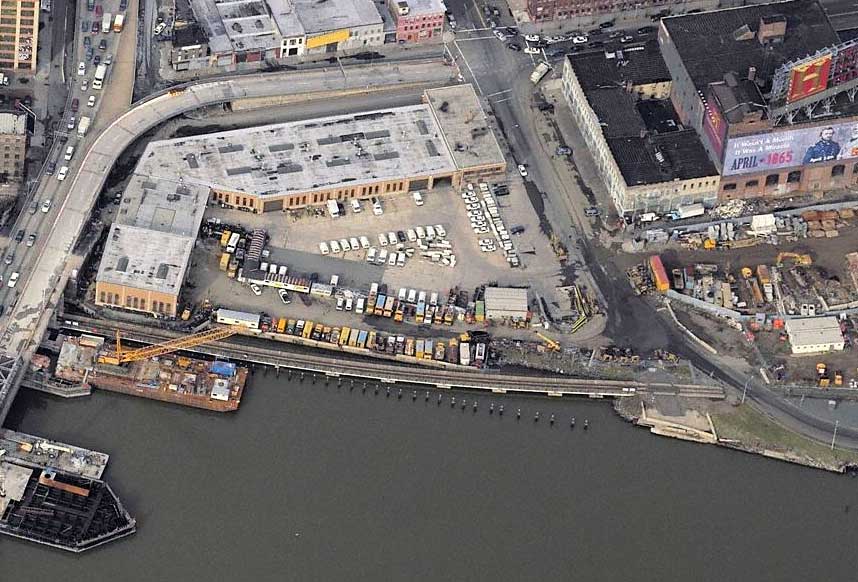
Using Windows Live Local mapping site I was able to locate the former CNJ Bronx Terminal. Not much left there to identify its roots, but the shape of the site is definately familiar.
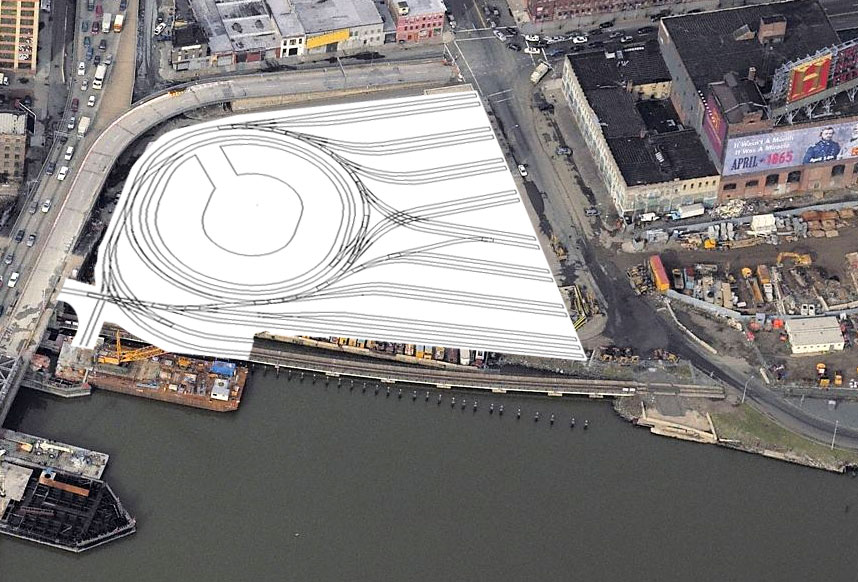
The same image with a drawing of the former terminal superimposed onto the site.
Here is a link to a very cool birds eye view of the site. This map is fully scrollable and very addictive!
Birds eye view of former CNJ Bronx Terminal location
Enjoy!
-Tim
Oops.
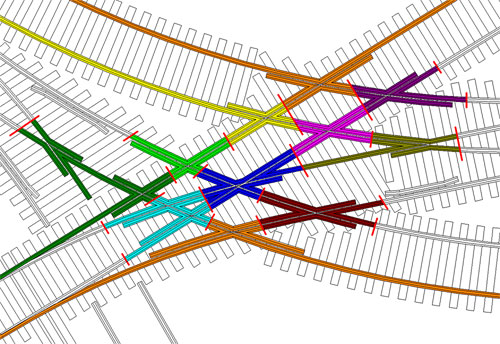
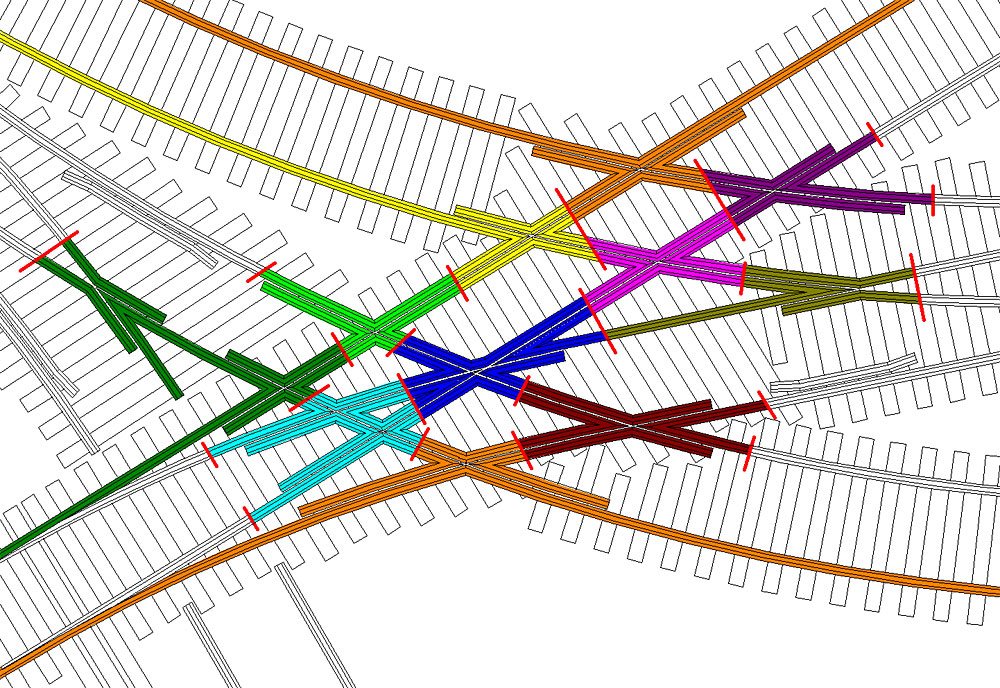
A sharp eyed modeler pointed out a mistake in the gapping in the section shown above. The Blue/Pink/Green frogs can all be a single section, like in the image below….
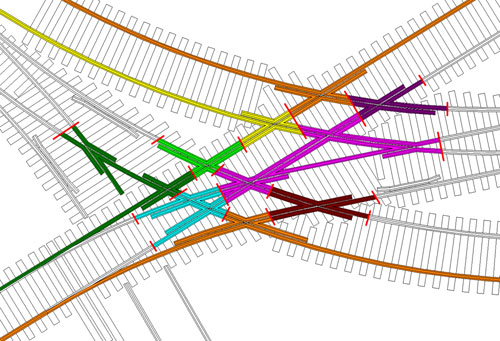
The logic being that only a single train can travel over the entire pink section at a time, therefore it isn’t necessary to isolate the three frogs, it can be left as a single section.
Thanks to David at The Gauge for pointing this out. It will save a few wires!
-Tim
Gapping complex trackwork.
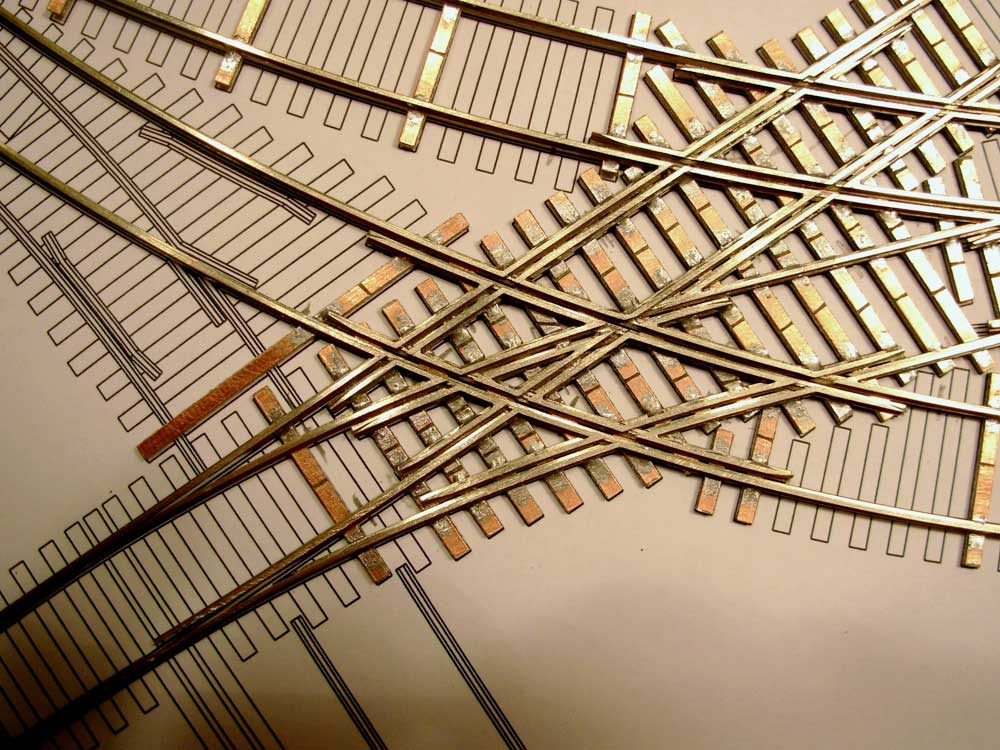
The number one thing I get asked about when someone sees this trackwork is “how will you wire this?”. Seeing all those frogs it looks very complex but once you understand the basics of where to isolate sections of track you develop an eye for where to cut the gaps.
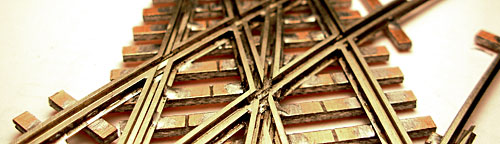
I design a lot of complex trackwork and part of the design is determining where modelers will need to cut gaps to have the trackwork operate properly. DC or DCC, the gapping is the same when building ultra-reliable track. To have trackwork (turnouts and crossings) work without shorts or equipment stalling it is necessary to “cut the frogs out”, that is to completely isolate the frog from the rest of the turnout and feed power to the frog independently from the turnout. Power is supplied to the frog from either a switch machines contacts or from a ground throw that has contacts on it.
The link will show a animated rendering showing how this works….
Rendering illustrating switching power to a frog.
The “polarity” of the frog is set to match either the “north” or “south” rail depending on which way the turnout is set. The same is true for multi frog trackwork. Each location where two rails cross each other (frogs) will need to be isolated from the rest of the track and powered independently based on the route selected.
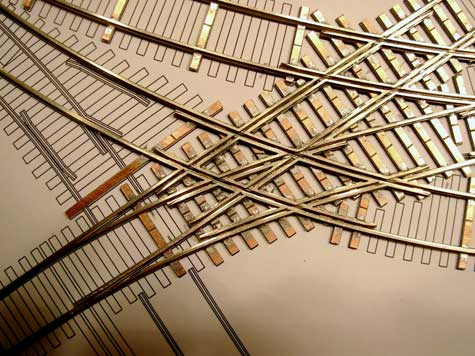
Image Copyright (c) 2007 Tim Warris
What I have illustrated here is all the different frogs in the first section of trackwork built. The gaps cut through the rails are shown in red. After studying the drawing for a while and thinking how a train would run through the trackwork I determined where each frog would have to be cut using a jewelers saw.
Power will be fed to each frog from the contacts of switch machines relative to the route selected. Additional contacts will be needed and will be supplied from relays connected to the switch machine contacts.
It isn’t as difficult as it appears, but when complete there will be lots of wires feeding all the different frogs, which does make it appear complex, but in reality it is the same circuit repeated several times. You end up with stuff like this…
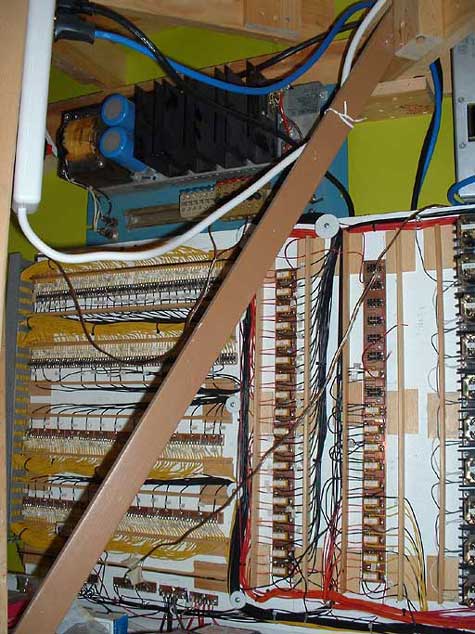
But it runs 100% reliably!
-Tim